Most curtain advice assumes an eight or nine foot ceiling. Once a room opens up to two stories, a lot of that advice stops working. Store bought panels end well short of the floor, an ordinary rod bends under the weight of a long drape, and the upper windows end up out of reach for good. Choosing drapes for these rooms is really a set of smaller decisions: where the hardware goes, which fabric will hang properly at that length, whether to add shades, and how anyone will open and close the top row of glass. Get those right, and the window treatment does its job for years.
What Changes With a High Ceiling
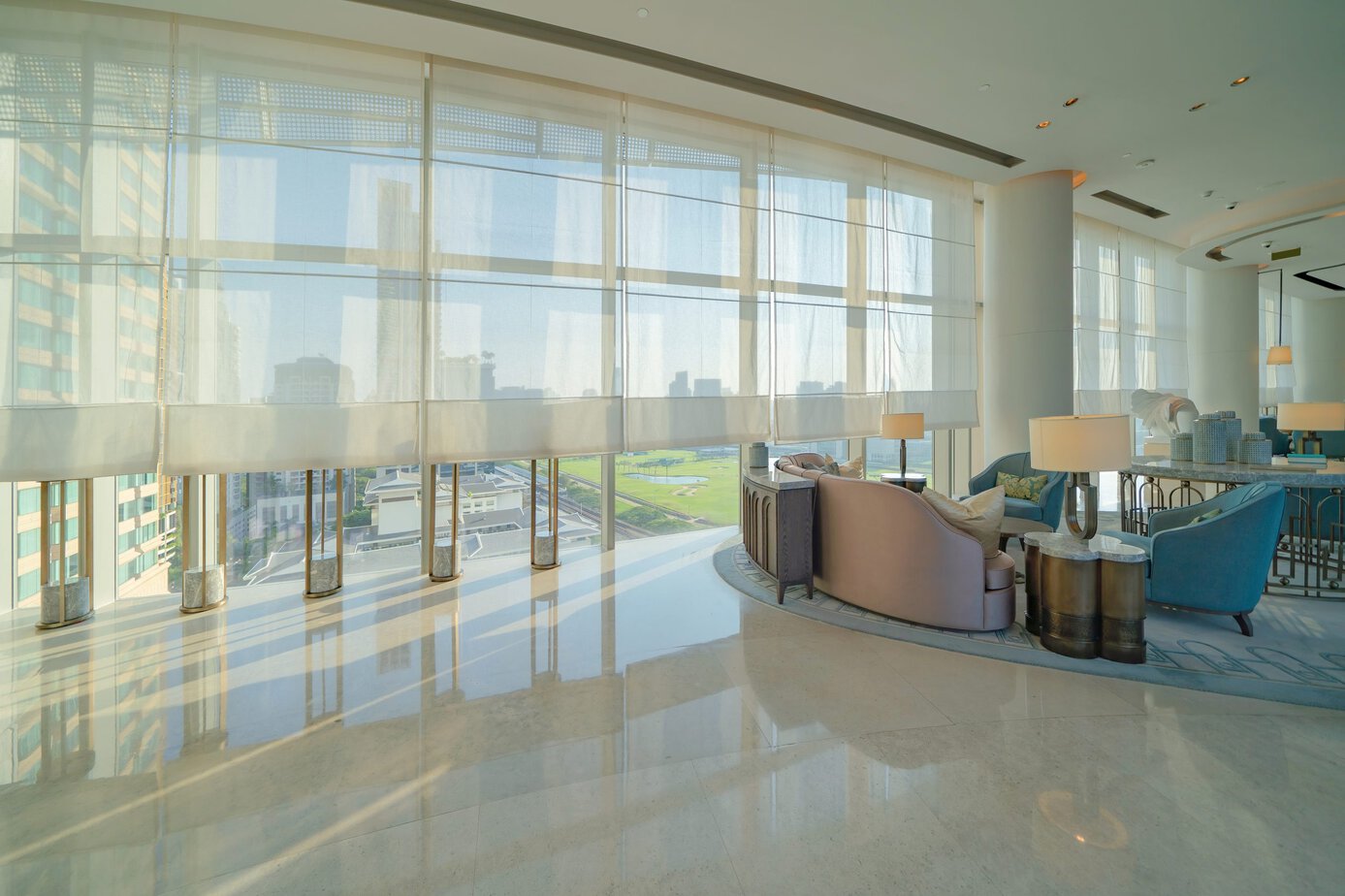
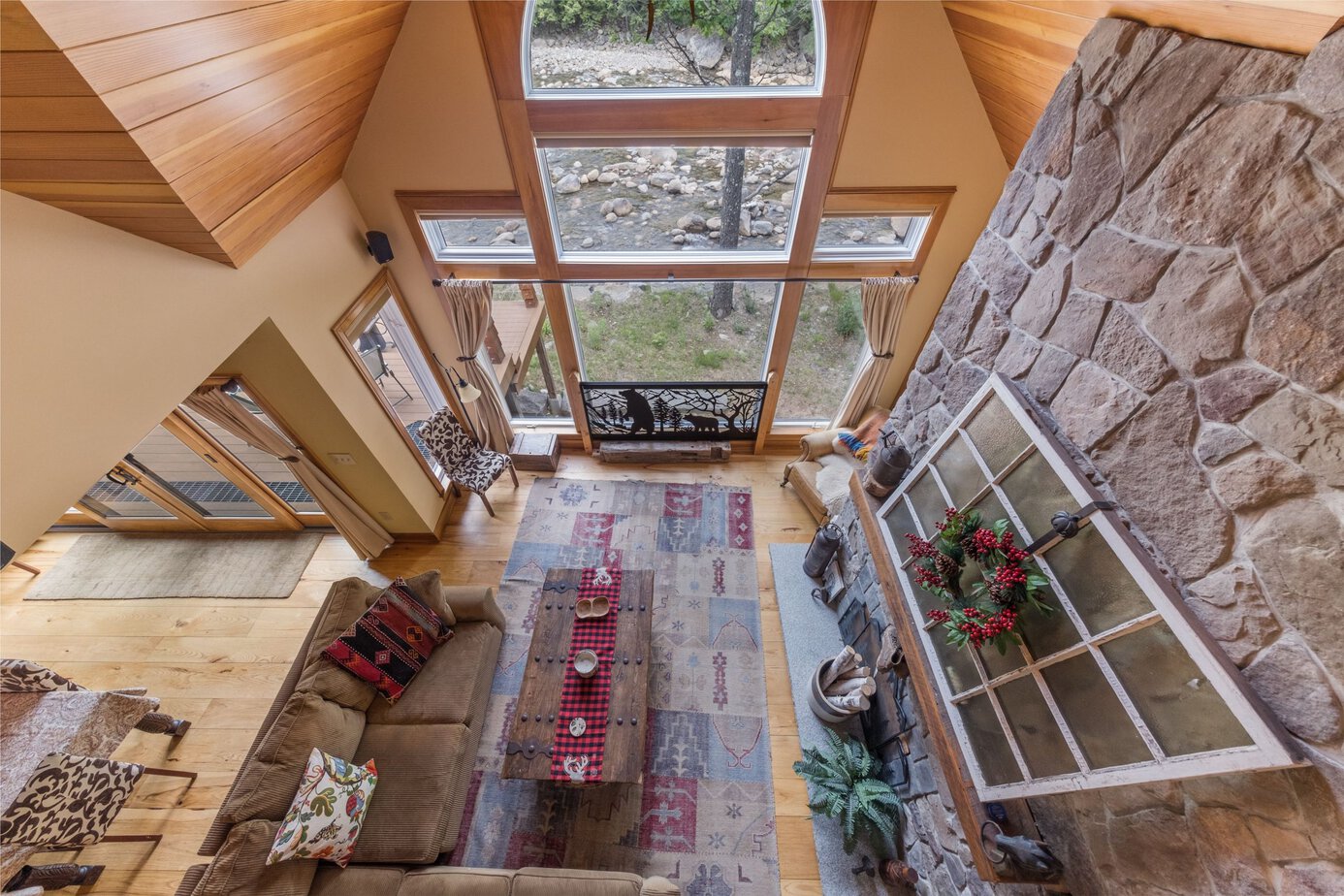
In a room with a normal ceiling, drapes are an accent. In a great room with 18 feet of glass, they’re closer to a wall. They become the focal point whether you plan for it or not, so proportion counts. Panels that stop a foot shy of the floor, or a rod parked just above the window casing, make the whole wall feel unfinished.
There’s a practical side, too. Long curtains are heavy. Sun coming through large windows can fade upholstery and flooring over time and put glare on every screen in the room. And if the only way to close the upper panels is a ladder, they’ll stay open.
Measuring and Mounting Come First
It’s tempting to start with fabric. Don’t. Measurements decide everything else, and on a tall drop, small mistakes get harder to hide. An error that would barely show on a short panel becomes obvious on a 16 foot one. Sloped ceilings, framing that’s slightly out of square, and trim that isn’t level are all common in two-story rooms, which is why professional field measuring matters so much here.

Ceiling Mounted or Wall Mounted?
If the windows run nearly to the top of the wall, mounting near the ceiling usually looks best. A ceiling-mounted track lets the panels fall floor to ceiling with no band of bare wall above them, and the room visually feels taller. When there’s more space above the frame, a wall mount can work just as well, as long as the rod sits high enough to add height instead of hugging the casing.
Arch tops are their own question. Plenty of designers leave the arch bare and dress only the rectangle below it, which keeps the architectural features on display. If that window takes harsh afternoon sun, though, a custom-shaped treatment for the arch may be worth it.
Long Curtain Rods Need Support
A long rod carrying heavy panels will sag in the middle unless it has help along the way. Plan for an extra bracket every few feet, and choose hardware that lets the panels glide past those brackets instead of catching on them. Tracks handle this well and nearly disappear in a modern room. Iron rods make more of a statement and suit traditional interiors. DMI carries its own decorative iron hardware as well as Graber hardware, so the choice can come down to style rather than whatever happens to be in stock.
Picking a Fabric That Hangs Well at Length
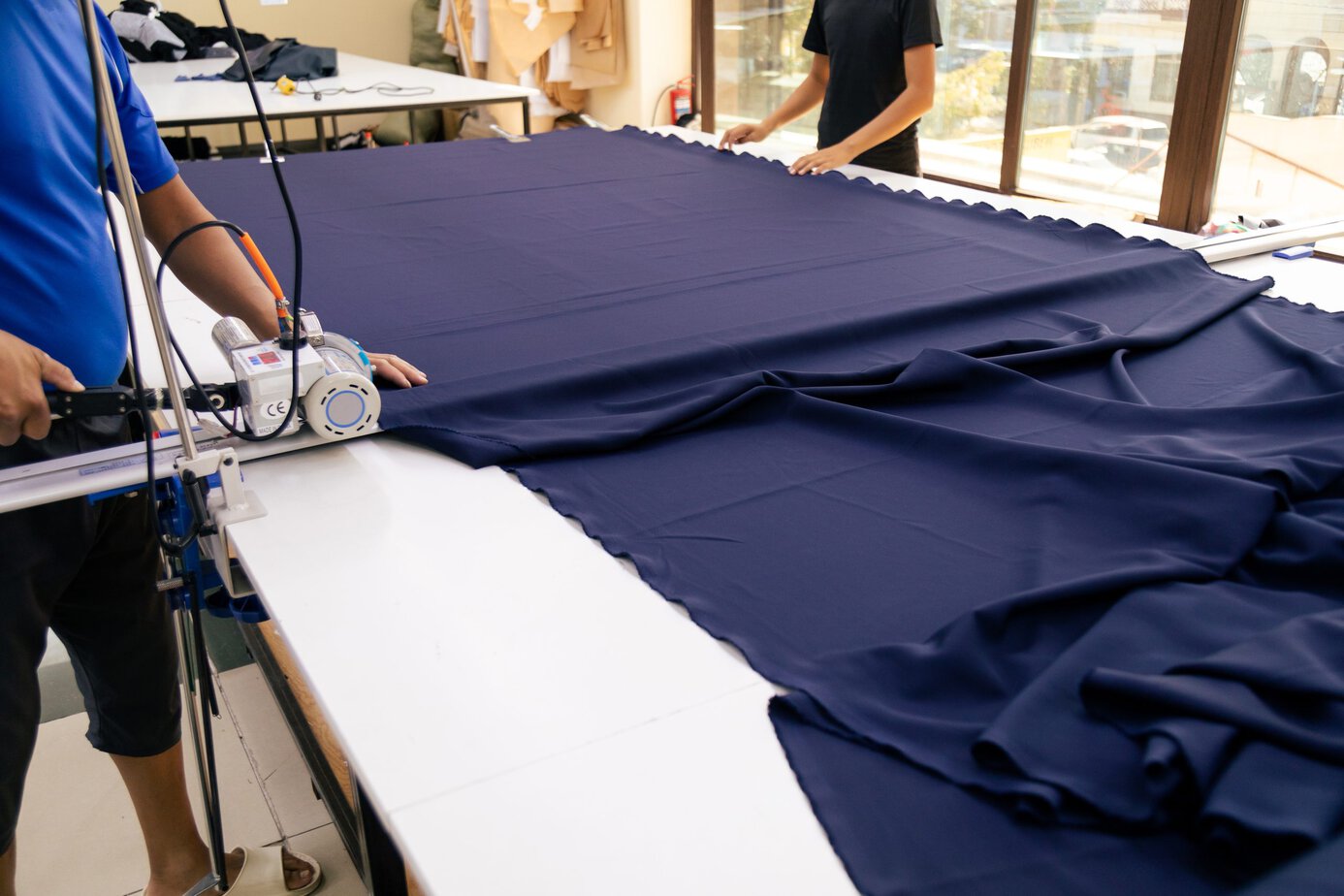
Fabric that looks great on a seven foot panel can behave very differently at sixteen. Weight is the big factor. Medium and heavier cloths, velvet included, hold their folds and fall straight, and they read as more luxurious from across the room. Lightweight sheers are lovely for filtering natural light, but stretched across a whole wall of windows they can look skimpy unless they’re made full.
Fullness is where a lot of projects go wrong. A common target is two to two and a half times the window width. On large windows, that’s a lot of yardage, and the temptation to cut back shows the moment the drapes are closed.
Lining deserves a mention too. It protects the face fabric from UV, gives the panel body, and adds some insulation. For bedrooms and media rooms, curtains and blackout lining together are the simplest way to get real darkness. Linen and other natural fibers have beautiful texture but can relax and shift in length a little with humidity, which is more noticeable on a very long drop.
Order swatches and look at them in the room itself, once in morning light and once in the afternoon. Colors shift more than you’d expect.

Ripple Fold, Pinch Pleat, or Grommet
The heading style sets the tone. Pinch pleats are tailored and timeless. Grommet draperies feel more relaxed and slide easily on a rod. Ripple fold gives soft, even waves on a track, which is why it turns up so often in contemporary rooms and in front of glass walls; the folds look the same from top to bottom no matter how tall the panel is.
One rule worth keeping: pick a style and use it across the wall. A pleated drapery panel downstairs with ripple fold above rarely looks intentional. The same goes for a bay window or any group of windows that sit together. Treat them as one piece.
Adding Shades Underneath
Drapes soften a room, but they aren’t great at fine adjustments to light. That’s what a shade is for, and layered window treatments are often the most livable answer in a two-story space.
Solar shades and roller shades cut glare and UV while keeping the view. Cellular shades insulate, which can help energy efficiency in a room with this much glass. Roman shades add fabric texture and suit smaller openings. In a traditional interior design scheme, wood blinds or shutters can fill the same role.
A setup that works in a lot of living rooms: full-height drapes framing the wall, solar shades on the upper windows, and adjustable shades on the lower windows, where privacy is a bigger concern. You keep the openness during the day and still have light control and privacy at night.
The Case for Motorized Curtains
Upper windows are the strongest argument for motorization. Motorized curtains and motorized shades run from a remote, a wall switch, or a schedule, so the top row can close on its own before the hottest part of the afternoon. No ladder, no twelve-foot wand.
It’s easier on the drapes as well. Hauling a heavy panel open by hand strains the fabric and the hardware, and the leading edge gets handled every single day. A motor moves it the same way each time. DMI can motorize any window treatment, so drapes and shades can run together on one system.
Installation Tips Before the Ladder Comes Out
Most problems with tall drapery show up during installation, not after. A few things to sort out ahead of time:
- Find out what’s behind the drywall near the ceiling. Heavy hardware needs framing, blocking, or anchors rated for the load.
- If you’re motorizing, plan for power before the walls are painted.
- Use a lift or scaffolding. Two-story work from a step ladder is how accidents happen.
- Dress the panels after they’re hung so the folds settle into straight, even columns.
Start Your Two-Story Window Project With DMI
Tall windows reward planning. Settle the mounting height, the hardware, the fabric, the layers, and how the upper windows will be operated, and the finished room will look like it was designed that way from the start.
Drapery Manufacturing Inc. has been making custom draperies since 1975 and works closely with interior designers and decorators to bring their plans to life. DMI handles professional field measuring, manufacturing, and installation, offers COM labor for residential and commercial projects, and supplies decorative hardware, motorization, and other window coverings. Fabric swatches are available on request.